Georgia Garden Planting Calendar: Region by Region
A planting calendar that works in Savannah can miss the mark in the North Georgia mountains: spring warmth arrives at different times, summer heat lasts longer in some areas, and fall frost comes sooner in others. This region-by-region calendar helps you choose suitable planting windows, plan spring and fall crops, and adjust for your own yard’s weather, soil, and elevation.
How to Use a Georgia Planting Calendar
Georgia’s gardening seasons do not begin and end on the same dates across the state. A useful calendar starts with your region, then adjusts for the conditions in your particular garden. Elevation, proximity to the coast, slope, shade, drainage, and nearby pavement or buildings can all shift when soil warms and when frost affects plants.
Think of planting windows as planning ranges rather than promises. A warm spell may tempt you to set out tomatoes, peppers, or beans early, but a return of cold weather can still damage tender crops. Likewise, a calendar date does not mean the soil is ready for seeds: cold, saturated ground can slow germination and expose seeds to rot.
Use several signals together:
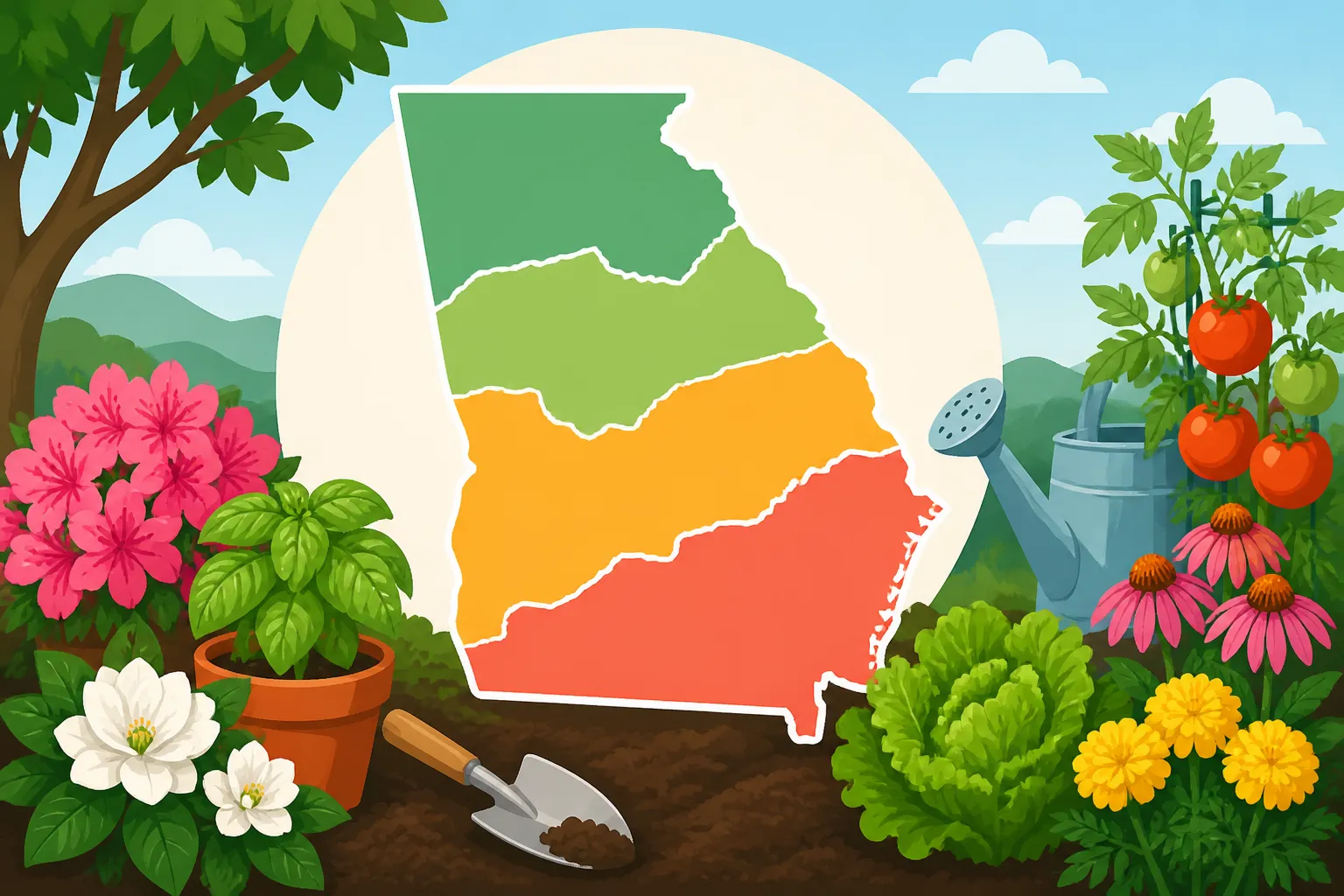
- Your broad region: North Georgia, the Piedmont and Middle Georgia, or the Coastal Plain.
- Recent weather: A stretch of warm days is useful, but it does not guarantee that cold weather is over.
- Soil conditions: Soil should be workable, not waterlogged or sticky, before planting or tilling.
- Crop needs: Cool-season crops tolerate cooler conditions; warm-season crops need warmer air and soil.
- Local frost outlook: Freeze dates and probabilities are estimates, and actual conditions vary from year to year.
The USDA Plant Hardiness Zone Map helps describe the average minimum winter temperatures that plants may face. It does not tell you when to sow vegetables in spring or when to transplant them. For that, frost estimates and local growing conditions are more relevant. For help checking a map zone without treating it as a planting date, see How to Check Your Yard’s Hardiness Zone on the Georgia Map.
| Georgia region | Spring pattern | Summer pattern | Fall-planning emphasis |
|---|---|---|---|
| North Georgia | Spring warmth arrives later, especially at higher elevations; late cold remains a concern | Warm growing weather, with local differences in heat and night temperatures | Start fall crops promptly because the season before frost can be shorter |
| Piedmont and Middle Georgia | Spring warms earlier than in the mountains, but late cold can still interrupt planting | Long, hot stretches can stress crops and reduce flowering or fruit set | Use late summer to establish crops for fall and early winter |
| Coastal Plain | Mild conditions often allow earlier starts, but local weather and soil still matter | Hot, humid conditions and warm nights shape crop performance | A long warm season can support extended fall planting, with local frost still guiding tender crops |
For more detailed seasonal planning, compare this overview with the Georgia Garden Planting Calendar: Region by Region and Month-by-Month Georgia Vegetable Garden Chores and Planting Calendar. The most reliable plan is the one that combines a regional calendar with observations from your own yard.
North Georgia: Allow for Elevation and Later Spring Warmth
North Georgia includes mountain and higher-elevation areas as well as lower valleys. That range matters. A garden at elevation may stay cold after a nearby town has warmed, while a sheltered, sunny valley yard can move ahead of exposed sites. Don’t rely on a single regional date to represent every North Georgia garden.
Late winter and early spring
Cool-season vegetables are the natural first step. Peas, spinach, radishes, carrots, beets, lettuce, and other greens can be scheduled while conditions are still too cool for tender summer crops. The exact opportunity depends on soil condition: seeds need soil they can grow in, not ground that is frozen, saturated, or still too cold for dependable germination.
Start with crops that tolerate cool weather and can be sown directly into a prepared bed. Peas and root crops are common choices for early sowing; leafy greens can also suit a cool spring window. If cold nights persist, a temporary cover may help protect young plants, but it does not make the outdoor climate equivalent to a warm greenhouse.
For crop-specific windows, see Cool-Season Planting Calendar for Georgia Home Plots and Cool-Season Crops You Can Plant in Georgia in February. Those calendars can help narrow the timing, but the garden’s elevation and current conditions still matter.
Mid-spring
As the soil becomes easier to work and daytime temperatures rise, expand the cool-season planting. Broccoli, cabbage, and other brassicas can be grown for spring harvest, but they need enough cool weather to develop before heat arrives. If you start seedlings indoors, plan for a sturdy transplant with several true leaves, not a spindly plant that has spent too long in a dim window.
Tender crops require a different threshold. Tomatoes, peppers, eggplant, beans, squash, cucumbers, corn, and okra should wait until frost risk has eased and the soil has warmed. The first sunny stretch of spring can be misleading: a bed may feel warm in the afternoon and still expose plants to damaging cold overnight.
For tomatoes, peppers, and okra, use Planting Tomatoes, Peppers, and Okra After Georgia Frost Risk as a crop-specific companion. For wider planning, Waiting Past the Final Freeze for Tender Georgia Vegetables explains why a predicted last frost is not a guarantee that the season is safe.
Summer
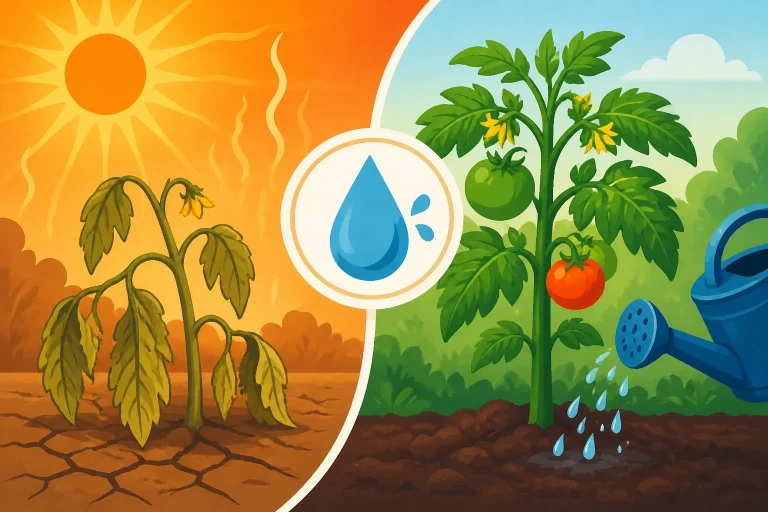
Once warm-season crops are established, North Georgia gardens can produce through the main summer period. Beans, cucumbers, tomatoes, peppers, squash, eggplant, and okra need consistent care as heat and dry spells develop. Watch the plants and the soil rather than following a fixed watering schedule. Wilting at midday may reflect temporary heat stress, but repeated or prolonged wilting can signal that roots are not getting enough moisture.
Mulch can reduce rapid soil drying and help moderate surface temperatures. Keep it from piling against stems, and check beneath it before watering: the surface may look dry while the root zone is still moist. Dense foliage also deserves attention after rain or overhead watering; stagnant, damp conditions can encourage leaf disease.
A second crop of beans, cucumbers, or squash may be possible when the first planting begins to decline, but sowing too late can leave the new plants struggling through the hottest weather or running out of time before fall cold. Use the expected harvest window and the crop’s maturity information to decide whether another round is practical.
Late summer and fall
In North Georgia, fall planting takes planning rather than last-minute improvisation. Many fall crops need to be sown or started while summer heat is still present so they can grow before daylight shortens and cold weather returns. A common mistake is waiting until comfortable autumn temperatures arrive; by then, seedlings may be too small to yield much.
Brassicas, carrots, beets, turnips, lettuce, spinach, and other greens can be part of a fall plan. For crops that are difficult to establish in hot beds, raise seedlings in a partially shaded spot and transplant them when they are strong enough. Keep new seedings evenly moist during hot weather, since drying near the soil surface can interrupt germination.
Use Fall Garden Planting Windows Across Georgia: Crop by Crop and When to Plant Fall Root Vegetables in Georgia Gardens to build a crop-by-crop schedule. For the first autumn freeze, use local probability information as a planning aid, not as a fixed deadline.
Piedmont and Middle Georgia: Balance an Early Start With Heat
The Piedmont and Middle Georgia generally warm earlier than higher parts of North Georgia, but spring can still bring a late cold snap. The season also transitions into substantial summer heat, so timing matters at both ends: plant cool-season crops early enough to mature before the heat, and establish fall crops early enough to grow before the season cools again.
Early spring crops
Cool-season sowing can begin while warm-season vegetables still need to wait. Peas, radishes, carrots, beets, lettuce, spinach, and other greens can make use of the cooler part of spring. Broccoli and cabbage are also options when started or transplanted with enough time to develop before sustained heat.
In Middle Georgia, a sunny, well-drained bed may warm faster than a shaded or low-lying one. Low spots can collect cold air, while raised or sloped areas may drain and warm more quickly. These differences can make two gardens in the same town behave differently.
Before planting, check that the bed is workable. Digging or tilling saturated soil can damage its structure and leave clods that are difficult for seedlings to penetrate. If the soil sticks heavily to tools or forms a slick mass, wait for it to dry enough to crumble. How to Tell When Saturated Soil Is Dry Enough to Till covers this practical checkpoint.
Transition to warm-season crops
Warm-season vegetables belong in the garden after the main spring cold risk has eased and soil has warmed. A sequence is often more dependable than planting everything at once. Start with a few plants or a short row, then add more when conditions are consistently suitable.
Tomatoes, peppers, eggplant, cucumbers, squash, beans, corn, and okra differ in how they are started and how much room they need. Some are usually transplanted; others are commonly direct-sown. Corn, for instance, needs enough plants arranged in multiple rows for good pollination, while cucumbers and squash require room for vines or a support system. A calendar gives the season, but spacing and bed layout help determine whether that planting will succeed.
If spring warmth arrives unusually early, do not assume that every tender crop should go in immediately. Cold soil can slow roots and increase the time plants spend under stress. If a cold night is forecast after planting, use a suitable cover and follow guidance for placing and removing it. Protecting Atlanta and Decatur Gardens from Late Spring Cold is useful for understanding the risk of a spring setback in urban and suburban gardens.
Summer production
The Piedmont and Middle Georgia summer can put crops under stress from heat, intense sun, and inconsistent rainfall. Tomatoes may flower without setting fruit during difficult heat, while leafy greens can turn bitter or bolt. Cucumber and squash foliage may look tired during the hottest part of the day, so check soil moisture before deciding whether to water.
A productive summer plan should include more than planting dates. Consider where afternoon shade falls, whether the bed drains after heavy rain, and how you will water during dry stretches. Deep, less frequent watering is generally more useful for established roots than frequent light sprinkling, but soil type and weather change how quickly the bed dries. Avoid watering by the calendar alone.
For heat-sensitive crops, plant in a spot that gets adequate sun without the worst reflected heat from walls or paving. Mulch and steady moisture help, but they cannot remove the effects of extreme heat. See Managing Blistering Midsummer Sun in Georgia Vegetable Gardens and How to Tell If Heat-Stressed Georgia Garden Plants Need Water for ways to distinguish heat stress from a need for water.
A second sowing of beans, cucumbers, or other quick crops may extend the harvest. Keep the new planting manageable: a fresh row that needs more water and pest attention than you can provide may not be worth the space. Remove declining plants when they are no longer productive, and avoid leaving diseased leaves or fruit in the bed.
Fall and winter crops
Fall crops in Middle Georgia often need a head start while summer still feels intense. Plan backward from the likely harvest period, allowing time for germination, seedling growth, and the crop’s development. When the planting window is narrow, choose crops that fit the time remaining rather than sowing a long-maturing crop simply because there is an empty bed.
Lettuce, spinach, carrots, beets, turnips, radishes, collards, kale, and other greens can contribute to fall and winter meals. Some crops tolerate cool weather better than others, and young seedlings are more vulnerable than established plants. A mixed planting spreads risk: if one crop struggles in the heat or is damaged by cold, the others may still yield.
The calendar for Middle Georgia also needs a transition plan. A bed that held tomatoes or squash may be reused, but first remove spent plant material and check whether pest or disease problems were present. Rotating crop families can help reduce the chance of carrying some problems from one season into the next. For a broader framework, see Succession Planting in Georgia to Maximize Garden Yields and Crop Rotation Schedules for Georgia Vegetable Plots.
Coastal Plain: Use the Longer Warm Season Without Rushing
The Coastal Plain often offers a longer period of warm weather than higher inland areas, but that does not make every planting date simple. Coastal and southern gardens still experience cold events, and local conditions can vary with distance from the coast, soil, exposure, and drainage. Hot, humid weather also influences which crops perform well and when it is practical to start fall vegetables.
Early-season opportunities
When conditions are suitable, the Coastal Plain may allow an earlier start on cool-season vegetables and warm-season crops than cooler parts of Georgia. The key is not to treat “coastal” as a guarantee of frost-free weather. Use local forecasts and frost probabilities, and be prepared to protect young plants if cold threatens.
Peas, radishes, carrots, beets, lettuce, spinach, and other cool-season crops can be planted during a favorable cool window. Warm-season crops still need suitable soil temperatures. If seeds sit in cold, wet ground, they may germinate poorly even when the calendar seems to allow planting.
The earliest weeks are also a good time to prepare beds, manage weeds, and check drainage. Sandy soils may dry quickly and require more frequent moisture checks than heavier soils, while poorly drained spots can stay wet after rain. Rather than guessing what the bed needs, notice how quickly water moves through it and how long the surface remains damp. Watering Georgia Vegetable Gardens: Sandy Soil vs. Heavy Clay offers a useful comparison.
Warm-season planting and summer care
Once frost risk has eased and the ground is warm, the Coastal Plain can support a broad warm-season garden. Beans, cucumbers, tomatoes, peppers, eggplant, squash, corn, and okra are options, with the timing and choice depending on the garden’s conditions and the gardener’s goals.
Heat arrives quickly in many locations, so avoid letting spring crops linger past their best window. Cool-season greens can bolt or lose quality when temperatures rise. If you want another planting, use heat-tolerant crops or wait for the fall cycle rather than expecting spring lettuce to perform through summer.
Water management is especially important in hot weather. Sandy soil can lose moisture quickly, but watering every time the surface looks dry can still waste water if the root zone is moist. Check below the mulch and near the active roots. For containers, which dry faster than in-ground beds, see Watering Georgia Container Gardens in Summer Heat Waves.
Hot, humid conditions can also keep leaves wet and encourage disease. Give plants room for air movement, remove badly affected plant material, and water in a way that avoids repeatedly wetting foliage when possible. Do not assume every spot or yellow leaf is a disease; drought, nutrient imbalance, insects, and root stress can look similar. Preventing Leaf Fungus by Watering Early in Georgia Gardens discusses one part of that prevention strategy.
Fall planting and extended harvests
A long warm season can give Coastal Plain gardeners flexibility for fall planting, but the same summer heat that supports warm-season vegetables can make seedlings difficult to establish. Shade young transplants during the hottest part of the day if needed, keep seedbeds evenly moist, and avoid sowing tiny seeds into a crusted, dry surface.
Fall vegetables may include beans, cucumbers, squash, carrots, beets, turnips, radishes, lettuce, spinach, collards, and kale. Their best timing depends on how quickly each crop grows and how much time it needs before cool weather. A crop may survive light cold but still need enough warm days to reach harvest size.
For an extended fall plan, divide the garden into stages. Sow a small first batch, then follow with another planting if the first one establishes well. This reduces the risk of losing the whole crop to a heat wave, heavy rain, pests, or a sudden change in weather. Read Georgia Fall Vegetable Planting from Mid-July Through September and Starting a Late-Summer Garden for Fall Harvests Across Georgia for more detailed seasonal planning.
Winter is not necessarily a complete pause in Coastal Plain gardening. Established greens and hardy root crops may continue to provide harvests during suitable conditions, though growth slows when days are short and temperatures drop. Protecting plants from a forecast freeze can help, but covers do not make crops invulnerable to severe cold. Check the plant’s cold tolerance and the forecast before relying on an unheated bed for winter production.
A Season-by-Season Calendar for the Whole State
The regional differences are easier to manage when you plan in crop seasons rather than assigning a single date to every vegetable. The following framework gives you a starting point; shift each step to suit your region and microclimate.
Late winter through early spring
Begin with cool-season crops. Peas, radishes, carrots, beets, spinach, lettuce, and other greens can occupy beds before warm-season vegetables are ready. In cooler areas or higher elevations, the outdoor start may be later; in warmer areas, a suitable window may open earlier.
Use this period to start transplants, prepare beds, and check soil condition. If starting seeds indoors, provide enough light and avoid keeping seedlings so warm and crowded that they become weak. Harden plants off gradually before transplanting so they can adjust to outdoor sun and wind.
Early planting does not mean working wet soil. If a bed is saturated, let it dry to a workable condition before digging. If weeds are already active, remove them while small and avoid disturbing the bed more than needed.
Mid-spring through early summer
This is the main transition from cool-season to warm-season crops. Cool-weather vegetables may still be harvested, but heat-sensitive crops need to be planted early enough to finish before conditions turn harsh. Transplant warm-season crops when cold risk is low and soil is warm enough for active growth.
Planting in stages can help spread the harvest and reduce the chance that all plants mature at once. It also gives you a chance to see how a crop responds before committing a large area. Succession planting is not always suitable for every crop: a new planting may mature during heat or run into fall cold before it produces.
Midsummer
Midsummer is often a period of maintenance, harvest, and selective replanting rather than a time to sow everything in the garden. Keep summer crops watered according to soil moisture, harvest regularly, and remove plants that have finished or become badly affected by pests or disease.
If you plant a second summer crop, consider whether it will establish in hot weather and mature in time. Fast-growing crops may fit; crops with a long development period may not. Shade cloth can reduce heat stress in some situations, but it changes light levels and does not replace watering or good crop timing. For specific options, see Using Shade Cloth to Rescue Garden Beds During a Georgia Heatwave.
Begin preparing the fall plan before summer ends. Order or organize seed, identify which beds will become available, and check how long each crop takes from sowing to harvest. Waiting until autumn weather feels comfortable can leave too little time for the crop to grow.
Late summer through autumn
Start fall crops while they can still establish in warm soil. Cool-season vegetables often need more attention at this stage than in spring because seedbeds dry quickly and young plants may be exposed to strong sun. Water gently enough to avoid washing seed away, and keep the top layer from drying during germination.
Use a mix of direct-sown crops and transplants. Root crops such as carrots and beets are usually sown where they will grow, since disturbing the young roots can affect their shape. Brassicas and some leafy crops can be started in flats or a protected, partly shaded spot and moved into the bed once established.
Plan the fall garden backward from the expected cold period. Use the crop’s maturity information as a planning estimate, not a promise: heat, cloud cover, water stress, and other conditions affect how quickly it grows. For help matching harvest timing to crop development, see Calculating Vegetable Maturity Dates for Fall Georgia Harvests.
Late autumn and winter
As temperatures cool, growth slows. Established greens and some root crops may remain harvestable, while warm-season crops decline. Covering a crop can reduce exposure to a cold night, but protection depends on the cover, its placement, the weather, and the crop’s tolerance. Follow the advice for the material you use and remove or vent it when conditions call for that.
Winter is also a useful time to review what worked. Note which beds stayed wet, where frost settled first, which crops bolted or failed to germinate, and how long harvests lasted. These observations are more useful than trying to follow a calendar that ignores your yard.
Build a Calendar Around Your Garden, Not Just Your Region
A regional calendar narrows the options; a yard-level plan makes them practical. To create one, map your growing spaces and record a few simple observations through the year. You do not need a complicated system. A notebook or calendar can capture enough information to improve next season’s timing.
- Identify your growing area. Note whether you are in North Georgia, the Piedmont or Middle Georgia, or the Coastal Plain. If you are near a regional boundary, compare both calendars and start with the more cautious window for tender crops.
- Record local conditions. Mark low spots, slopes, exposed beds, shaded areas, and places warmed by walls or pavement. Note where frost appears first and where the soil stays wet longest.
- Check seasonal estimates. Use local frost probabilities and forecasts to inform decisions. These are probabilities, not fixed dates, and actual freeze timing varies from year to year. First and Last Freeze Dates for Georgia Gardeners and NOAA Spring Freeze Probabilities: Choosing Safe Dates provide additional context.
- Match crop to season. Separate cool-season vegetables from warm-season ones. Decide which crops will be direct-sown and which will be transplanted.
- Work backward from harvest. For fall crops, use expected maturity time to estimate when sowing needs to happen. Add a margin for slower growth, hot weather, and interruptions.
- Leave room for succession. A small follow-up sowing can extend harvest, but only if there is enough time and space for the crop to grow.
- Review and adjust. At the end of each season, record what germinated, what struggled, when frost affected the garden, and which planting dates seemed too early or too late.
A calendar should also reflect how much time you can spend tending the garden. More plantings create more opportunities, but they also mean more watering, weeding, harvest, and pest monitoring. A smaller number of well-timed beds can be more rewarding than a packed schedule that is hard to maintain.
Common calendar mistakes include planting tender crops after a warm spell without considering a cold return, sowing fall crops too late, putting seeds into waterlogged soil, and treating a published date as a guarantee. Another is trying to grow every crop in every season. Some vegetables are much easier to grow during their preferred cool or warm window; choosing that window is often better than trying to force them through unsuitable weather.
Keep a flexible plan. If spring stays cold, continue with suitable cool-season crops and postpone tender transplants. If a hot spell arrives early, protect young plants from stress and reconsider crops that need cooler weather. If a fall planting misses its ideal window, choose a crop that can mature in the time remaining or reserve the bed for another use.
Frequently Asked Questions
Does Georgia have one statewide planting calendar?
No. Planting windows differ across North Georgia, the Piedmont and Middle Georgia, and the Coastal Plain. Elevation, yard conditions, and weather can shift them further, so use a regional calendar as a starting point.
Can I plant tomatoes as soon as the last frost date passes?
A predicted last frost date is not a guarantee. Wait until local conditions are suitable, including warmer soil, and watch for cold forecasts. A tender crop planted too early can be stressed even if it avoids a damaging freeze.
When should I start fall vegetables?
Start planning in summer. Many fall crops need to be sown or started while the weather is still hot so they have time to establish before temperatures cool. Use the crop’s maturity information and your region’s expected cold period to work backward.
Can I use the USDA Plant Hardiness Zone Map to choose planting dates?
Not by itself. The map describes average winter minimum temperatures, not spring frost timing or soil temperature. Use it for winter-survival context, and use local seasonal conditions to plan vegetable sowing and transplanting.
What should I do if my garden is colder or warmer than the calendar suggests?
Follow the conditions in your yard. A shaded, low-lying garden may need a later start than a sunny, well-drained site nearby. Record when your soil becomes workable, when frost settles, and how crops perform so you can adjust future plantings.
Disclaimer
This article is for general informational purposes only and does not constitute professional advice. Laws, prices and regulations vary by location and change over time. Consult a qualified professional for guidance on your specific situation. Georgia Gardening Guide is not a government agency and is not affiliated with any university extension, state department of agriculture or other government agency.