Georgia Fall Vegetable Planting from Mid-July Through September
A fall garden in Georgia is not simply a spring garden planted later. Summer heat, different regional conditions, and the time remaining before cold weather all affect what is worth sowing. This article explains how to plan vegetable plantings from mid-July through September, choose crops for each part of the season, and adjust your schedule to your yard.
Build the schedule around your location
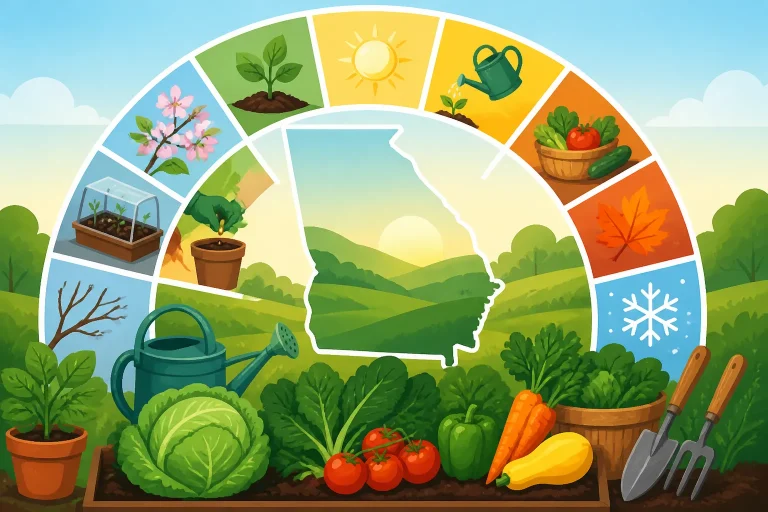
Georgia’s planting windows vary by region, so the best starting point is your part of the state—not a single statewide date. According to University of Georgia Cooperative Extension, in middle Georgia, the main planting periods are spring (March to May) and fall (mid-July to September). That describes the broad fall season, not a promise that every crop belongs in the ground throughout the entire period.
A planting window is more useful when you think of it as a sequence. Earlier in the fall-planning period, conditions may suit crops that need time to grow before cooler weather. Later, prioritize crops that can establish and produce within a shorter stretch, or that are suited to cooler conditions. The exact handoff depends on your location, the crop, and the weather.
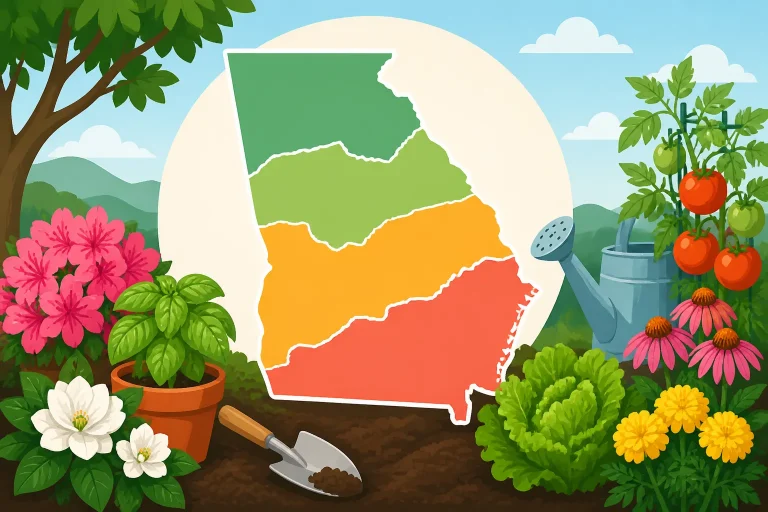
North and south Georgia can differ in how quickly fall weather arrives and how long warmth persists. Elevation, exposure, and local cold pockets can also affect a garden within a region. A low spot where cold air settles may not behave like a sunny, sheltered bed nearby. For more context on regional differences, see How Georgia Planting Dates Shift from North to South and How Microclimates Shift Planting Schedules Across Georgia.
Use a regional calendar as a starting point, then compare its guidance with the conditions in your garden. Georgia Garden Planting Calendar: Region by Region can help you narrow the schedule by area. If you are planning around frost risk, First and Last Freeze Dates for Georgia Gardeners explains why those estimates should be treated as probabilities rather than fixed promises. A forecast can still differ from a long-term estimate, so keep a little flexibility in your plan.
| Part of the fall window | Planning focus | What to consider |
|---|---|---|
| Mid-July and the earlier part of the window | Get suitable fall crops established while warmth remains | Heat, soil moisture, and how much time the crop needs |
| The middle of the window | Continue sowing or transplanting crops suited to local conditions | Regional planting guidance and the crop’s maturity information |
| September and the later part of the window | Favor crops that fit the remaining growing conditions | Local cold risk, establishment time, and whether a cover is available |
This is a planning framework, not a crop-by-crop calendar. The table deliberately avoids assigning universal dates to individual vegetables: a schedule that fits one Georgia garden may be too early or too late for another.
Choose crops by how they handle heat and cool weather
A useful fall garden often combines crops with different temperature preferences. Some vegetables can be sown while the soil and air are still warm; others are better suited to the cooler conditions later in the season. Choosing by temperature preference helps prevent a common frustration: sowing a crop that might grow well in fall but asking it to germinate or establish during an unsuitable stretch of weather.
Warm-season vegetables generally need warmth to grow well. They may be options for an earlier fall planting if the local calendar and the crop’s expected growing time leave room for them. But the fact that a crop can tolerate summer conditions does not mean a late planting will produce a worthwhile harvest. Check the maturity information on the seed packet or plant tag and compare it with the growing time likely to remain in your garden.
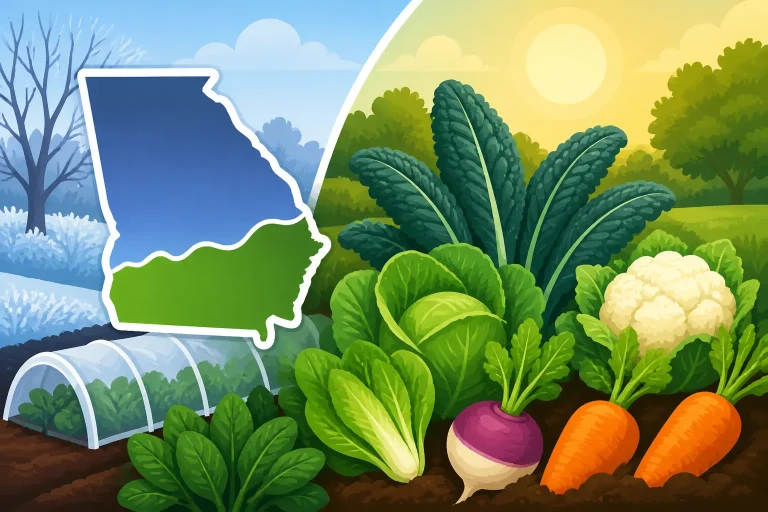
Cool-season vegetables are often the better fit as conditions become milder. Gardeners commonly plan fall beds around leafy greens and root crops, along with other vegetables that suit cooler weather. The right choices still depend on when you plant, where you garden, and how quickly the crop develops. For crop-specific ideas and timing, see Cool-Season Planting Calendar for Georgia Home Plots and Fall Planting Windows for Georgia Home Vegetable Gardens.
It can help to group your choices into three practical categories:
- Crops to sow or transplant while the season is still warm: Consider these earlier in the window, especially if their maturity information indicates they need more time. Protect young plants from harsh afternoon heat where needed and pay close attention to moisture.
- Crops that suit the transition to cooler weather: These can help bridge the summer-to-fall shift. Use the recommended planting guidance for your region rather than assuming the same date works statewide.
- Crops for cooler conditions: These are often more suitable for later planting, but their success still depends on getting them established and on the weather that follows.
A diverse planting plan can also make the garden less dependent on one perfect sowing day. Instead of filling the whole bed with a single crop, consider choosing crops with different temperature preferences and harvest periods. If an early sowing struggles in heat, another crop or later planting may still do well.
For crop-by-crop guidance, the reference articles When to Plant Fall Root Vegetables in Georgia Gardens, When to Plant Fall Lettuce Across Georgia, and Fall Sowing Schedules for Overwintering Root Crops and Greens address individual groups. Use those recommendations alongside a regional calendar; do not treat a general crop label such as “cool-season” as a substitute for local timing.
Prepare beds for summer heat before sowing
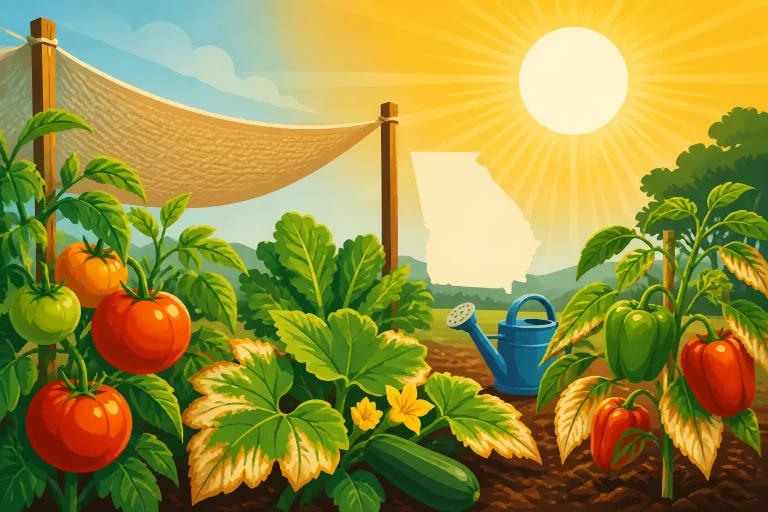
Mid-July planting starts in the middle of a Georgia summer. Before sowing, look at the bed itself: Is it drying out quickly? Does afternoon sun make the soil especially hot? Is the soil compacted, crusted, or difficult to water evenly? A little preparation can make the difference between seed that germinates reliably and seed that struggles in exposed, dry ground.
Clear spent crops and weeds from the planting area, then check the soil’s condition. Soil should be workable rather than saturated or powder-dry. If a bed has been neglected, remove debris and loosen the surface without working wet soil. For more detailed bed preparation, see Soil Preparation Guide for Georgia Vegetable Plots. If you are deciding whether to improve an existing bed or start a raised one, Raised Beds vs. In-Ground Plots in Dense Georgia Clay can help you compare the trade-offs.
Good seed-to-soil contact matters for direct-sown crops. Make a shallow furrow or planting hole as directed on the packet, place the seed, and cover it with the recommended amount of soil. Water gently enough to avoid washing seeds out of place. Follow the seed packet for sowing depth and spacing; those requirements vary by crop and should not be guessed from one vegetable to another.
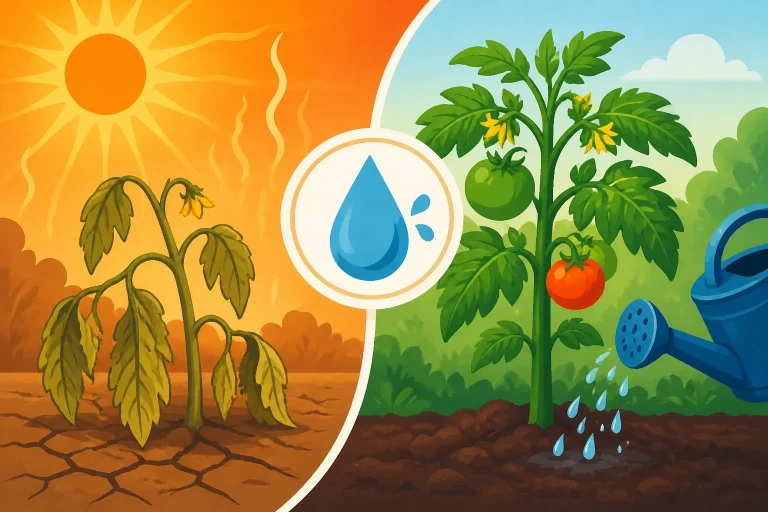
Heat can dry the surface layer before seeds have a chance to germinate. Check moisture regularly, especially in exposed beds and containers. The goal is to keep the seed zone from drying out while avoiding soil that remains waterlogged. Sandy soil and heavier clay soil hold and drain water differently, so the same watering routine may not suit both. Watering Georgia Vegetable Gardens: Sandy Soil vs. Heavy Clay explains how soil type affects watering decisions.
For seedlings and transplants, consider whether the site is receiving intense afternoon sun. Shade can ease heat stress for young plants, but too much shade may limit growth. Choose the location based on the crop’s light needs and the conditions in your yard. If a bed receives punishing afternoon sun, a temporary way to reduce exposure may help young plants establish; do not assume every crop needs the same protection. Managing Blistering Midsummer Sun in Georgia Vegetable Gardens covers ways to assess and manage summer exposure.
Mulch can help reduce soil-surface drying and moderate soil conditions, but keep it from interfering with seed emergence or crowding plant stems. A thin, appropriate layer around established plants is different from covering a newly sown row so heavily that seedlings cannot emerge. See Using Garden Mulch to Cool Vegetable Soil in Summer Heat for more on using mulch in hot conditions.
If you use fertilizer or any other garden product, follow its label and base decisions on the product directions and reliable local guidance. Avoid adding amendments simply because a bed looks tired; soil conditions are not always obvious from appearance. For help interpreting soil and fertilizer choices, see How to Test Vegetable Soil and Pick Fertilizer in Georgia.
Time each planting by maturity and frost risk
A calendar date alone does not tell you whether a crop can finish. A more practical question is whether the crop has enough suitable growing time left after it emerges or is transplanted. Seed packets and plant tags provide maturity information, but interpret it as guidance, not a guarantee: conditions in your garden can change how quickly plants grow.
For a direct-sown crop, account for the time it takes seeds to germinate and seedlings to establish, not only the time from a visible plant to harvest. For transplants, consider whether the young plants are healthy and ready to grow on in your bed. A plant that has been stressed before planting may need time to recover. If you are starting seeds indoors, check crop-specific instructions and allow for the transition from protected conditions to outdoor weather.
Work backward from the likely end of the growing period, using local frost information as one planning tool. Frost estimates do not predict the exact conditions in a particular year or yard. A sheltered spot may stay warmer than a low-lying area, and an exposed bed can cool faster than a protected one. That uncertainty is why a later planting should usually be chosen with more care: the crop needs to have a reasonable chance to develop before cold weather limits growth.
The crop’s maturity information helps compare options. If a crop needs a longer period to reach harvest, it may be a better fit earlier in the fall window. Crops that develop more quickly or are suited to cooler weather can offer more flexibility, but they still need enough time to establish. Avoid relying on one date as a guarantee that a late sowing will succeed.
The planning process is straightforward:
- Check the recommended planting window for your region and the crop.
- Read the seed packet or plant tag for maturity and growing requirements.
- Consider the time needed for germination or transplant establishment.
- Compare that estimate with local frost-risk information and the conditions in your yard.
- Choose an earlier planting, a quicker crop, or a more protected site if the later window looks tight.
For help comparing fall freeze conditions, Comparing Spring and Autumn Freeze Normals Across Weather Stations explains why weather-station information can differ. How to Time Georgia Fall Crops Before Frost offers additional context for planning crops around the end of the season.
Avoid treating the first forecast of a chilly night as the same thing as a dependable end-of-season date. A forecast is useful for immediate decisions, while planting calendars and freeze estimates help with longer-range planning. Keep those tools separate: use local guidance to decide what to plant, then watch the forecast as the season progresses.
Sow in stages and adjust as the season changes
Planting everything at once can leave you with a large, uneven harvest or a bed that fails as a whole if weather turns unfavorable. Staggering sowings gives you more than one chance to establish a crop and can spread harvests over time. It also lets you respond to what the first planting tells you about your soil, watering, and exposure.
For a crop suited to repeated sowings, plant one section first and leave room for a later sowing if conditions remain favorable. The gap between sowings should follow crop guidance and your local schedule rather than a universal interval. Some crops respond well to successive plantings; others are better treated as a single planting. Succession Planting in Georgia to Maximize Garden Yields explains how to use repeated sowings where they make sense.
Keep notes as you go. Record when you sowed, whether the soil was dry or moist, how quickly seedlings appeared, and whether they struggled in heat. Those details help you adjust the next planting without relying on memory. If seedlings fail, inspect the planting area before simply sowing again. Dry seedbeds, hard crusting, uneven watering, pests, or seed planted too deeply can all interfere with emergence.
Transplanting gives you a head start, but it does not remove the need to match the crop to the season. Set out sturdy, healthy plants and water them in. Watch for signs of wilting while they establish, but do not assume every drooping plant needs repeated watering; check soil moisture first. If your garden is in a hot spell, How to Tell If Heat-Stressed Georgia Garden Plants Need Water can help distinguish heat stress from a need for more moisture.
As the season progresses, reassess what remains in the garden. If one crop is finishing, clearing it can open space for a more suitable later planting. Remove diseased or heavily damaged plant material rather than leaving it in place, and keep weeds from competing with new seedlings. You may also be able to use a bed that previously held a spring or summer crop, as long as its condition and the new crop’s needs are suitable. When to Replant Georgia Vegetable Rows Immediately After Harvest discusses how to make use of a cleared row.
If the garden is already partway through the fall window, do not assume that every opportunity has passed. Instead, ask whether a crop can develop under the conditions that remain. Choose a crop with an appropriate growth period, check the regional planting guidance, and consider whether a protected location can help. Is It Too Late to Start a Fall Garden in Georgia? addresses how to evaluate a late start without treating one statewide date as decisive.
The most dependable approach is to stay flexible. A successful fall plan is not a rigid list of dates; it is a set of crop choices that fit the region, the weather, and the time available. Start with local recommendations, prepare the bed for summer conditions, and let what happens in your garden guide the next sowing.
Frequently Asked Questions
Can I plant vegetables throughout the whole fall window?
Not every crop fits the entire window. Choose crops according to your region, current conditions, maturity information, and the time likely to remain before cold weather limits growth.
Should I use the same planting dates across Georgia?
No. Regional conditions, elevation, and yard-level differences can change what works. Start with a planting calendar for your area and adjust for your garden’s exposure and local frost risk.
What should I do if I am starting late?
Compare the crop’s maturity information with the growing conditions likely to remain. Consider crops that suit cooler weather or a more protected site, and check crop-specific guidance before sowing.
Is a frost date a guarantee?
No. Freeze estimates are planning tools, not fixed predictions for a particular year or yard. Local conditions and actual weather can differ, so use the estimate alongside current forecasts.
Sources
- University of Georgia Cooperative Extension — Vegetable Garden Calendar | CAES Field Report (checked November 15, 2026)
Disclaimer
This article is for general informational purposes only and does not constitute professional advice. Laws, prices and regulations vary by location and change over time. Consult a qualified professional for guidance on your specific situation. Georgia Gardening Guide is not a government agency and is not affiliated with any university extension, state department of agriculture or other government agency.