Managing Blistering Midsummer Sun in Georgia Vegetable Gardens
Georgia’s midsummer sun can turn a productive vegetable garden into a patch of wilted leaves, scorched fruit, and stalled growth. The fix is not always more water: excess heat, dry soil, poor airflow, and exposed fruit can all contribute. This guide explains how to spot the cause, protect crops, and adjust care without sacrificing the sunlight vegetables need.
Why midsummer sun stresses Georgia vegetable gardens
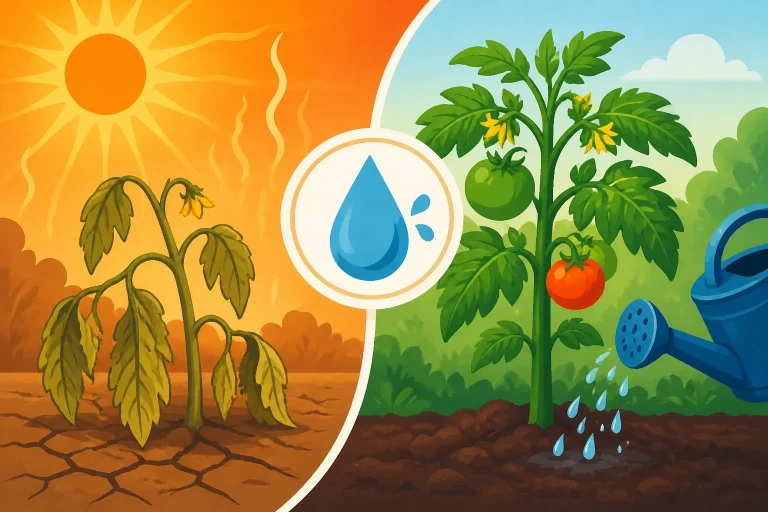
Sunlight is essential for vegetable growth, but strong light arrives alongside heat that can outpace a plant’s ability to absorb water and cool itself. A plant may wilt during the hottest part of the day even when the soil is not completely dry. If it recovers as conditions ease, that temporary droop is different from persistent wilting caused by a deeper watering problem.
Heat stress can show up in several ways: leaves may curl, droop, or look dull; flowers may drop; young fruit may stop developing; and exposed fruit can develop pale or damaged patches. A plant under stress may also become more vulnerable to pests and disease. These signs do not all point to the same cause, so check the plant and the soil before deciding what to change.
The challenge is that sun, heat, and water interact. A plant in full sun may use soil moisture quickly. If the soil dries faster than its roots can take up water, leaves lose turgor and wilt. If the soil stays saturated, roots can have trouble functioning, and the plant may also wilt. Adding water without checking the soil can therefore make the problem worse.
The University of Georgia Cooperative Extension advises: Choose a garden site that receives at least 8 to 10 hours of sunlight a day. If a bed already has strong sun exposure, the goal is usually not to eliminate sunlight altogether. Instead, protect plants during the harshest conditions, keep roots supplied with moisture without waterlogging them, and reduce unnecessary stress.
It also helps to distinguish between plants that need relief and plants that are simply experiencing a difficult afternoon. A brief midday droop followed by recovery may not require a major change. Persistent wilting, scorched leaves, damaged fruit, or soil that remains dry beneath the surface call for closer attention.
Use a practical sequence when a plant looks heat-stressed:
- Look at the soil, not just the leaves. Check whether it is dry, moist, or saturated near the root zone.
- Note when the symptoms appear and whether the plant recovers later.
- Inspect fruit and leaf surfaces for damage, pests, or signs of disease.
- Check whether a nearby barrier, wall, or reflective surface is intensifying heat.
- Change one part of the growing conditions at a time, then observe the plant’s response.
For help distinguishing heat-related wilt from watering problems, see How to Tell If Heat-Stressed Georgia Garden Plants Need Water. If leaves continue to decline despite suitable soil moisture and temporary shade, consider other causes rather than assuming the sun is the only problem.
Check soil moisture before changing your watering routine
A wilted plant is not automatically a thirsty plant. During hot weather, leaves can droop because water is leaving them faster than roots can replace it. That can happen even when the soil still has moisture. A quick surface glance is not enough to tell whether the root zone needs water.
Check the soil close to the plant, where active roots are growing. If it is dry there, watering may be appropriate. If it feels moist, wait and inspect again rather than adding more water just because the leaves look limp. When the soil is saturated or remains wet, focus on drainage and root conditions instead of increasing irrigation.
Watering deeply enough to moisten the root area is generally more useful than repeatedly wetting only the surface. Shallow, frequent watering can encourage roots to remain near the top of the soil, where moisture can disappear quickly in hot weather. The right approach depends on soil texture, bed structure, plant size, rainfall, and how quickly the garden dries. For details about watering depth, see How Deeply to Water Vegetable Roots in Georgia Soils.
Watering early in the day can give plants time to take up moisture before the heat builds. It can also help keep foliage from staying wet into the evening, which is useful when managing leaf diseases. Aim water at the soil around the plants rather than routinely soaking the leaves. If rain has fallen, do not assume it reached the roots: check the soil before deciding whether to irrigate. Did Summer Rain Soak Deep Enough, or Should You Water Anyway? covers that decision in more detail.
Avoid using a fixed routine that ignores the garden’s actual condition. A container may dry sooner than an in-ground bed, and sandy soil may lose moisture more quickly than heavier soil. A plant in a raised bed may also need closer monitoring than one growing in ground-level soil. The best signal is the moisture in the root zone, not the calendar.
| What you observe | What it may indicate | A useful next step |
|---|---|---|
| Leaves droop in heat, but soil is moist | Temporary heat stress or fast water loss from leaves | Check whether the plant recovers as conditions ease; avoid adding water automatically |
| Leaves droop and root-zone soil is dry | The plant may need water | Water the soil around the root zone and reassess |
| Leaves droop while soil is saturated | Poor drainage or impaired roots may be involved | Pause irrigation and check whether water is draining |
| Fruit has pale, dry, or damaged patches on the exposed side | Sunscald may be affecting exposed fruit | Protect fruit with foliage or temporary shade |
| Damage appears on leaves throughout the plant | Heat, water stress, pests, or disease could be involved | Inspect carefully before choosing a remedy |
For additional help comparing moisture-related symptoms, see Avoiding Overwatering: How Often to Soak Your Summer Garden and How to Water a Georgia Lawn and Garden—if available in your own reading list, use the vegetable-specific watering resources linked above rather than applying lawn advice to crops. The important point is not to water by appearance alone. Soil and plant symptoms together give a more reliable picture.
Use temporary shade without depriving crops of useful light
Shade can reduce the heat load on a garden, but permanent, heavy shade may leave fruiting vegetables with too little light for strong growth. A temporary screen over the hottest part of the day can be a more flexible option. It gives plants some protection while preserving the bright conditions they need when the sun is less intense.
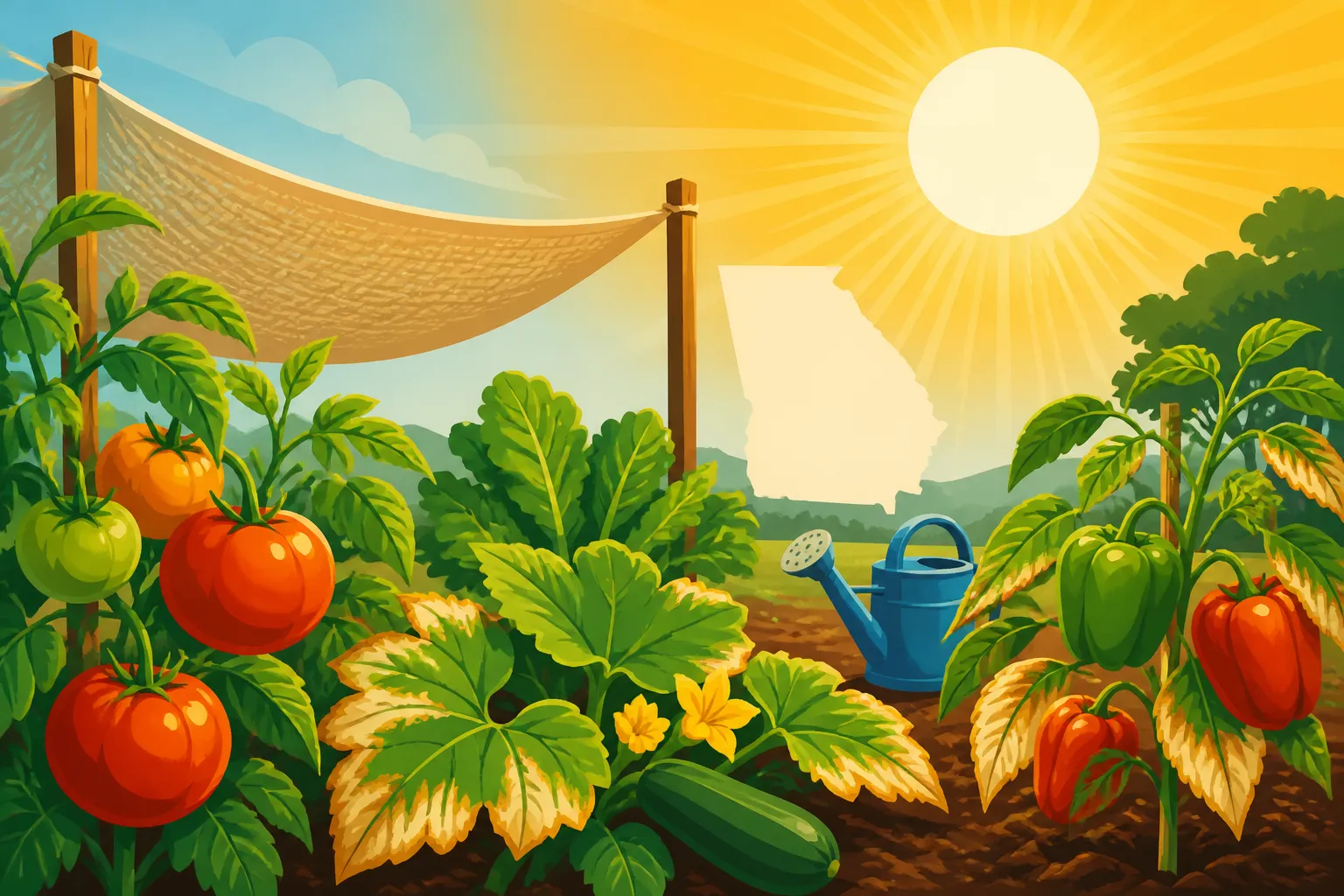
Shade cloth is one way to create that screen. Set it above the crop on a stable support rather than laying it directly on leaves or fruit. An elevated cover leaves room for airflow and makes it easier to check plants, harvest, and water. Anchor the structure securely so that wind does not pull it across the bed or damage stems.
The right amount of shade depends on the crop, the site, and the symptoms you are trying to relieve. A leafy crop that is wilting or turning bitter may benefit from more protection than a fruiting crop that still needs strong light to set and mature fruit. Start with a modest change and watch for the response. If plants become leggy, growth slows, or flowering declines, the cover may be blocking too much useful light.
A temporary screen can be especially useful when a garden has a hot, exposed corner or when a crop is newly transplanted and has not yet established a broad root system. It can also help protect sensitive leaves during a stretch of intense weather. Avoid treating shade as a substitute for correcting dry soil, poor drainage, or other underlying stress.
Site the cover so that it does not trap heat against the plants. Keep the sides open where practical, and make sure leaves are not pressed against the material. Check the bed under the cover, since shade can change how quickly soil dries. Plants may need water less often than those in direct sun, but their moisture needs still depend on soil, weather, and root development.
For a focused walkthrough, see Using Shade Cloth to Rescue Garden Beds During a Georgia Heatwave. If the garden is in containers, an adjustable shade position can help accommodate shifting sun and heat on a patio. Container Patios Facing Intense Afternoon Georgia Sun discusses how to think through that kind of exposure.
Shade works best as part of a broader plan. If plants are wilting because roots are dry, address water as well. If fruit has become exposed after leaves were removed or damaged, protect that fruit directly. If a bed is crowded and airless, shade alone will not solve the problem.
Protect fruit and leaves from direct exposure
Sunscald happens when fruit that has been shaded by foliage becomes exposed to strong sunlight. The affected area may look pale, bleached, or dry, and it can become damaged as the condition worsens. Tomatoes, peppers, and other fruiting crops can be at risk when leaves are lost to disease, pests, pruning, or breakage.
Keep healthy foliage around developing fruit whenever possible. Leaves help shield fruit from direct sun, so avoid stripping a plant bare in an effort to tidy it or make harvesting easier. Prune only when there is a clear reason, and avoid removing protective leaves around fruit that is already exposed.
If a plant has lost enough foliage to leave fruit uncovered, a temporary shade screen can help. Another option is to position nearby plants or a movable barrier to reduce the most intense direct exposure without blocking light from the whole garden. Do not wrap fruit tightly or place material against it; trapped heat and poor airflow can create new problems.
Harvest ripe or damaged fruit promptly. Fruit with sunscald may still be usable if the affected area is limited, but badly damaged portions can soften or decay. Inspect nearby fruit as well, since exposed fruit on the same plant may be at risk even if it has not yet developed visible damage.
Leaf damage requires a careful look. Scorched margins and bleached patches can be consistent with heat or sun exposure, but irregular spots, holes, webbing, or insects may point to a different issue. If symptoms keep spreading after conditions improve, do not assume sunscald explains everything. Consider whether disease, pests, or an irrigation problem is also present, and seek local identification help when the cause is unclear.
Keep harvest practices gentle during hot weather. Avoid breaking branches while reaching for fruit, since sudden leaf loss can expose fruit that had been protected. If pruning is necessary, work conservatively and keep an eye on the fruit that is left in direct sun afterward.
Reduce heat around roots with mulch and careful bed care
Bare soil can heat and dry more quickly than soil covered with organic material. Mulch helps moderate the soil surface, slow moisture loss, and reduce the splash of soil onto lower leaves. It does not replace watering, and it cannot correct drainage problems, but it can make moisture conditions steadier between irrigations.
Apply mulch so that it covers the soil without pressing against stems. Keep the plant base clear enough to avoid holding excess moisture against tender tissue. A loose, even layer is easier to manage than a thick pile concentrated around the crown. Check beneath the mulch when assessing soil moisture: the surface may look dry while the soil below is still damp.
Mulch type and performance depend on what is available and how the bed is managed. Organic materials break down over time and can contribute to soil organic matter, but they may need replenishing. Avoid using material that is contaminated or that could introduce unwanted seeds or plant disease. For more on choosing and managing materials, see Using Garden Mulch to Cool Vegetable Soil in Summer Heat and Selecting Mulch and Managing Soil Moisture in Georgia Gardens.
Avoid cultivating deeply around established vegetables when the soil is hot and dry. Many crop roots are close to the surface, and unnecessary disturbance can injure them or expose more soil to drying. If weeds are competing for water, remove them carefully while minimizing damage to crop roots. A clean bed also makes it easier to spot moisture problems and inspect plants.
Check whether water runs off before it soaks in. Compacted or crusted soil may shed irrigation, leaving the root zone dry even though the surface got wet. Watering slowly in stages can help water enter the soil rather than flow away, but adjust to the site and stop if water begins to pool. If drainage is consistently poor, investigate the bed rather than trying to solve the issue with more frequent watering.
Raised beds and containers may need a different approach from in-ground plots because they can lose moisture faster. In a container, inspect the mix near the roots and make sure water can drain freely. In an in-ground bed, consider whether the soil is drying unevenly or whether a nearby surface is reflecting heat. Watering Georgia Vegetable Gardens: Sandy Soil vs. Heavy Clay can help match watering decisions to soil conditions.
Adjust care to the crop and the garden layout
Not every vegetable responds to midsummer conditions in the same way. Leafy crops may show heat stress sooner than established plants with deep roots. Fruiting crops may keep growing but fail to set flowers or develop quality fruit during stressful conditions. A crop’s stage matters too: a newly transplanted seedling has different needs from a mature plant with an established root system.
Group crops according to their needs when planning a bed. Put plants that need the brightest exposure where they will not be shaded by taller neighbors, and position crops that benefit from some afternoon relief where they can receive it without being blocked all day. Taller plants can create useful partial shade, but they can also reduce light and airflow for nearby vegetables. Watch the pattern across the bed as the sun moves rather than judging the site from a single moment.
Spacing matters during hot weather. Crowded plants may have limited airflow, and foliage that stays wet or pressed together can make it harder to inspect for disease. At the same time, a plant with too little leaf cover may leave fruit exposed. Aim for a balance: enough room to manage the bed and keep leaves healthy, while preserving the foliage that protects fruit.
Succession planting can help keep the garden productive without asking heat-sensitive crops to perform through the most difficult conditions. Rather than assuming every crop should be planted at once, plan around seasonal windows and the growing conditions each crop prefers. Month-by-Month Georgia Vegetable Garden Chores and Planting Calendar and Georgia Garden Planting Calendar: Region by Region can help with the broader schedule.
When a crop repeatedly struggles in a particular spot, consider whether the location is the problem. A paved edge, reflective wall, or enclosed corner can make a bed feel hotter than a more open location. A container that sits on a hot surface may also face added stress. Moving a portable pot, adjusting a shade screen, or changing where a future crop is planted may work better than trying to maintain an unsuitable location indefinitely.
Keep notes on what happens in each bed. Record which plants wilt, where fruit gets sunscald, how quickly the soil dries, and whether shade improves the problem. Notes make it easier to identify a recurring hot spot or a crop that needs a different planting window next season. They can also prevent unnecessary watering or pruning in response to a symptom that has another cause.
Make a practical midsummer response plan
A useful response begins with observation rather than a single automatic fix. If a plant wilts, check the root-zone soil. If the soil is dry, water the soil around the plant and reassess. If it is moist, look for heat exposure, root problems, pests, and disease before adding more water. If fruit is exposed, preserve remaining foliage and consider temporary shade.
Work through the garden in a consistent way:
- Identify which plants are affected and whether the symptoms are limited to one bed, one crop, or the whole garden.
- Check soil moisture near the roots, not only at the surface.
- Look for exposed fruit, damaged leaves, pests, crowded growth, or poor drainage.
- Choose a targeted change, such as adjusting irrigation, adding temporary shade, or mulching bare soil.
- Recheck the same plants and soil conditions to see whether the change helped.
Avoid making several large changes at once unless the plants face an immediate risk. If you water heavily, prune extensively, add shade, and apply other products together, it becomes difficult to tell which change helped or caused a new problem. A focused adjustment makes the garden easier to manage and gives you clearer information.
Do not use fertilizer as a quick fix for wilt or sun damage. Fertilizer cannot restore scorched tissue or correct inadequate water uptake, and unnecessary applications can add stress. If you suspect a nutrient problem, use soil-test guidance and follow the fertilizer label. For damaged leaves, prioritize the growing conditions and determine whether symptoms are continuing before deciding on additional treatment.
A midsummer garden will not always look perfect through intense heat. Some older leaves may be damaged, and growth may slow even when care is appropriate. Focus on whether plants are producing healthy new growth, whether moisture is reaching the roots, and whether developing fruit is protected. Remove badly damaged material only when doing so will not expose more fruit or injure the plant.
When symptoms persist or spread, ask for help identifying the cause rather than treating a guess. A local Extension office can help gardeners determine whether a problem is related to pests, disease, soil, or growing conditions. Use its official website for current contact details. For additional water-related troubleshooting, Common Georgia Vegetable Garden Troubles and Watering Fixes may help connect symptoms with practical next steps.
Frequently Asked Questions
Should I water every time a vegetable plant wilts?
No. Check the soil near the roots first. A plant may wilt briefly in heat even when the soil is moist, while saturated soil can also cause wilting. Water when the root zone is dry, and investigate other causes when it is not.
Is shade cloth suitable for every vegetable?
It can help when intense exposure is stressing plants, but excessive shade may reduce useful light, especially for fruiting crops. Use a supported, adjustable cover where practical and watch for signs that plants are receiving too little light.
Should I remove leaves that look scorched?
Remove leaves only when they are badly damaged or diseased, and take care not to expose developing fruit. Foliage can shade fruit and help protect it from sunscald. If you are uncertain whether damage is caused by heat or disease, identify the cause before pruning.
Why does a plant wilt when the soil is wet?
Wet soil can limit the roots’ ability to function, especially if drainage is poor. Check whether water is pooling or the soil remains saturated. Adding more water is unlikely to help; focus on drainage and root health.
Disclaimer
This article is for general informational purposes only and does not constitute professional advice. Laws, prices and regulations vary by location and change over time. Consult a qualified professional for guidance on your specific situation. Georgia Gardening Guide is not a government agency and is not affiliated with any university extension, state department of agriculture or other government agency.