Atlanta Warm Spells: When to Safely Plant Tender Crops
A sunny stretch in Atlanta can make a garden feel ready for tomatoes, peppers, eggplant, and okra well before spring weather settles down. The risk is that a warm spell is not the same as a safe planting window: cold can return, and warm air does not always mean warm soil. Here’s how to weigh freeze information, garden conditions, and crop readiness before planting.
Why an Atlanta warm spell can be misleading
A run of mild afternoons can prompt an understandable question: is it finally safe to plant tender crops outdoors? The difficulty is that daytime warmth gives only part of the picture. A garden can feel springlike at midday and still face a damaging cold night, especially when the forecast changes or the yard has a colder-than-average spot.
Tomatoes, peppers, eggplant, and okra are warm-season crops that should not be treated like cool-weather greens. The University of Georgia Cooperative Extension advises planting these crops after all danger of frost has passed. That is a condition to assess, not a promise that one sunny afternoon or a date on a calendar makes planting safe.
Atlanta’s spring weather can shift quickly. A warm spell may arrive while the broader pattern is still unsettled, and a cold front can bring cooler nights after several comfortable days. Even when a forecast looks favorable, conditions at a particular garden may differ from those at a weather station. Low areas, exposed beds, and sheltered spaces can experience different temperatures.
The safest decision comes from combining several clues rather than relying on one:
- The typical timing of the last spring freeze provides background, not a guarantee.
- The forecast helps you judge the immediate risk, but it can change.
- Your yard’s microclimate may be warmer or colder than the surrounding area.
- Soil and plant condition matter, not just the afternoon air temperature.
- A plan for delaying planting or protecting plants can reduce the cost of a mistaken call.
It can help to think in terms of risk rather than a single “safe date.” Planting early may give you more time in the garden, but it exposes tender plants to more uncertainty. Waiting can feel frustrating during a warm spell, yet it may prevent a setback that costs time, plants, and effort. If you are weighing a specific warm-weather window, Waiting for Safe Warm Soil Before Planting Atlanta Summer Crops offers a related look at soil readiness.
A warm spell is useful information. It signals that spring is progressing and gives you a chance to prepare beds, check supplies, and monitor the forecast. But it does not, by itself, establish that frost danger has ended. The aim is not to predict weather perfectly. It is to avoid treating short-term warmth as proof that the risk is gone.
What the Atlanta freeze normal can and cannot tell you
A historical freeze normal can help put spring timing in context. It cannot tell you exactly what will happen in a particular yard this season. NOAA’s figure below is useful as a reference point, but it should be read alongside current forecasts and local conditions.
At the Atlanta Hartsfield-Jackson International Airport weather station, the 1991–2020 normal last spring freeze (32°F) at 50% probability is 03/15 (March 15), according to NOAA National Centers for Environmental Information.
The key to interpreting that figure is its probability. A 50% probability is not a guarantee that the final freeze will occur on that date, nor does it mean every Atlanta neighborhood experiences the same conditions. It represents a statistical normal for a named weather station over a stated period. A particular spring can depart from that pattern, and a garden can be colder or warmer than the station’s surroundings.
That distinction matters during a warm spell. If the calendar has moved past the normal date, a late cold event is still possible. If the date has not arrived, the normal does not mean that every night before it will freeze. Either way, the figure describes likelihood over time, not a forecast for the garden.
Keep these ideas separate:
| Information | What it helps you judge | What it does not promise |
|---|---|---|
| A freeze normal | The typical pattern around a weather station | The last freeze date for your yard |
| A current forecast | The near-term outlook for the area | Conditions that cannot change |
| Your garden’s microclimate | How exposed or sheltered your planting spot may be | A guarantee against cold injury |
| A warm afternoon | Whether current daytime conditions feel mild | That nights will remain warm |
| A protected growing space | Whether you have an option for temporary shelter | That protection will always prevent damage |
For a fuller explanation of how normal dates work, see First and Last Freeze Dates for Georgia Gardeners and NOAA Spring Freeze Probabilities: Choosing Safe Dates. Those topics can help you understand why freeze timing is best used as a planning aid rather than a countdown to a guaranteed planting day.
It is also important not to confuse a regional date estimate with a forecast. Forecasts address expected near-term weather and can be revised as conditions develop. Historical normals summarize past patterns. Neither one can tell you exactly how cold a particular bed will become overnight.
A careful gardener uses the normal as a reason to stay alert, then considers the forecast and the yard itself. If a warm spell falls near the usual transition into spring, the practical question is not simply whether the air has warmed. It is whether the remaining frost risk is acceptable for the crop and whether you can respond if the forecast turns colder.
Check the forecast and your yard, not just the calendar
Before planting tender crops, look at the expected overnight conditions, not only the daytime high. A sunny day can warm a patio or raised bed while the night remains cold. The forecast should be checked close to planting and revisited as the weather approaches, because a favorable outlook can shift.
Pay attention to the forecast for the location most relevant to your garden. A general metro-area forecast may not capture every difference between neighborhoods, slopes, or yards. A station reading is a useful reference, but a home garden’s exposure can make the local experience different.
Notice where cold settles in your yard
Some areas are more exposed than others. Cold air can collect in low spots, while a site with shelter from buildings or other structures may experience different conditions. A raised bed, a slope, and a low-lying patch can each have their own pattern. Do not assume a planting spot is warm just because another part of the property feels comfortable.
Consider the features of your location:
- Low ground: A dip or drainage swale may be more vulnerable to cold settling than a nearby higher area.
- Open exposure: A bed with little shelter may be more exposed to wind and changing weather.
- Nearby structures: Walls and paved surfaces may affect local conditions, but their influence varies by site and should not be treated as a guarantee.
- Shade: A shaded bed may warm more slowly than a sunny one.
- Slope and orientation: Different parts of a sloping yard can receive different amounts of sun and exposure.
- Container placement: Pots can be moved if conditions change, but they can also cool quickly when left exposed.
These are clues, not precise temperature measurements. If you are unsure how your yard behaves, observe it through more than one weather change before relying on it for tender plantings. Notes about which spots warm first, stay damp, or feel exposed can improve future decisions. How Microclimates Shift Planting Schedules Across Georgia explains why one planting schedule does not fit every local site.
Check soil condition as well as air
Warm afternoons can make the surface of a bed feel ready, while deeper soil remains cool or wet. A plant moved from a protected setting into chilly garden soil may struggle even if the weather looks pleasant during the day. The bed’s texture, drainage, and recent weather all affect how it feels and dries.
Do not use a few hours of sun as evidence that the entire root zone has warmed. Instead, check the soil where you intend to plant and compare conditions across the bed. If it is cold, saturated, or difficult to work, waiting can be the more sensible choice. Avoid working soil when it is wet enough to clump or smear; disturbing it in that state can damage its structure.
A soil thermometer can help you compare one bed with another, but the reading is only one part of the decision. Follow the instructions for the instrument and interpret the result in relation to the crop and current forecast. The available facts here do not set a soil-temperature threshold for these crops, so do not rely on a made-up cutoff.
For more on using temperature and freeze information together, see Checking Soil Temperatures and Frost Dates Before Sowing. If your bed needs broader preparation, Soil Preparation Guide for Georgia Vegetable Plots covers the work that can be done before planting.
Look for a stable pattern, not a single comfortable day
A period of mild weather can be encouraging, but one pleasant afternoon offers little evidence about the nights ahead. Watch how conditions develop rather than making the decision from a snapshot. A cooler forecast after a warm spell is a reason to pause, especially if plants would be difficult to cover or move.
This does not mean waiting for perfect certainty. Spring weather rarely offers that. It means using the information available, recognizing what it cannot establish, and choosing an approach that matches your tolerance for risk. If losing a tender plant would be costly or would disrupt your plans, waiting for a more settled outlook is a reasonable trade-off.
Match planting decisions to the crop and the plant
The timing decision is about more than a calendar date. It also depends on what you are planting, how it was started, and whether the plant is ready to face outdoor conditions. A healthy transplant moved out too early can still be set back by cold. A plant that has not adjusted to outdoor light and wind can struggle even when frost is not in the forecast.
Tomatoes, peppers, eggplant, and okra are the named tender crops to consider here. They have a shared need for a warm-season planting window, but they are not interchangeable in every other respect. Handle each crop according to its growing instructions, and do not assume that success with one crop proves that conditions are right for all the others.
Transplants need a gradual transition
Plants raised indoors, under cover, or in a sheltered retail setting have not experienced the same conditions as plants in an open garden. Directly moving them into bright sun, wind, and changing temperatures can cause stress. Acclimate transplants gradually before setting them out, and follow the plant supplier’s or seed-starting instructions for the process.
During that transition, observe how the plants respond. If leaves wilt badly, scorch, or remain stressed, give them time to recover rather than treating a warm afternoon as a reason to rush. A gradual adjustment helps prepare a transplant for outdoor exposure, but it does not make a frost-sensitive crop frost-proof.
Check each plant before planting. Look for firm stems, healthy leaves, and roots that hold the growing medium together without appearing severely tangled or damaged. Avoid planting a plant that is already badly stressed if you can give it time to recover in a suitable protected setting.
When the forecast raises concern, keep transplants in a place where they can be sheltered, then reassess. Plants in pots are easier to move than plants already in the ground. This flexibility is one reason some gardeners keep tender crops in containers or delay transplanting until the outlook is more reassuring.
Direct sowing and transplanting have different risks
Planting seeds directly in a bed avoids transplant shock, but the seed and young seedling are still exposed to outdoor conditions. Transplants have a head start in growth, but they can be damaged by a cold snap and may need careful adjustment to the garden. Neither method removes the need to consider frost risk.
If you are comparing approaches, focus on what you can manage:
- Direct sow when the soil and forecast suit the crop, and when you can keep the bed in good condition.
- Transplant when the plant is ready, the outdoor conditions are suitable, and you have a plan for unexpected cold.
- Delay either method if the weather outlook is unsettled and you cannot protect the planting.
- Avoid sowing or transplanting simply because a warm spell makes the garden feel ahead of schedule.
For crop-specific timing, Planting Tomatoes, Peppers, and Okra After Georgia Frost Risk is a useful companion. For the broader range of spring tender vegetables, see When to Plant Frost-Tender Vegetables in Spring Across Georgia. Those topics should be used alongside local forecasts rather than as a substitute for them.
Avoid treating one crop’s success as proof
A sheltered spot may suit one crop and not another. A transplant that handles a cool night without visible injury does not prove that the next night will be safe, nor that another crop will respond the same way. Differences in plant size, recent care, exposure, and growing conditions can affect how a plant fares.
Make planting decisions by bed and crop, rather than making one decision for the entire garden. If only one location is ready, start there. If another bed is colder or wetter, it can wait. Staggering your work can be more practical than moving every tender crop outdoors on the first warm weekend.
A practical decision process for planting during a warm spell
When the weather turns mild, use the opportunity to prepare and reassess, not to rush. A simple process can help you make a decision that accounts for the crop, the yard, and the changing forecast.
- Confirm what you plan to plant. Identify whether it is a frost-sensitive warm-season crop such as tomato, pepper, eggplant, or okra. Check the crop’s growing instructions rather than applying a general rule to every vegetable.
- Review the current outlook. Look at overnight expectations as well as daytime warmth. Recheck the forecast near the planned planting time, especially if the weather pattern is changing.
- Consider the historical freeze context. Use the regional normal to understand the broader timing, not as a promise about the current spring or your specific yard.
- Evaluate the exact planting spot. Consider whether it is low, exposed, shaded, or sheltered. Compare the bed with other parts of the garden rather than assuming the property has one uniform climate.
- Check the bed. Make sure soil is workable and not saturated. If you use a thermometer, follow its instructions and interpret its reading in the context of the crop and forecast.
- Assess the plant. A transplant should be healthy and gradually adjusted to outdoor conditions. Give a stressed plant time to recover.
- Decide how much risk you can accept. If you cannot protect or move plants if conditions turn cold, waiting may be the better option.
- Keep a backup plan. Know what you will do if the forecast changes after planting. A plan made before the weather turns is easier to act on than one improvised at the last moment.
This process is not a guarantee. It is a way to make the decision more deliberate and less dependent on one sunny afternoon. Different gardeners will make different choices because their sites, access to protection, and tolerance for setbacks differ.
When waiting is the sensible call
Pause if the forecast suggests a return to cold conditions, the bed is still chilly or wet, or the planting spot is especially exposed. Waiting is also sensible if the seedlings are not acclimated or if you cannot provide any protection when the outlook changes.
Waiting does not mean doing nothing. You can prepare the bed when the soil is workable, organize supports, label the planting area, inspect transplants, and keep an eye on forecast updates. These tasks make it easier to plant promptly once conditions are more favorable without turning preparation into premature planting.
A gardener may also choose a staged approach. Plant a small portion in a relatively sheltered location, then wait to see how the weather and plants respond before setting out everything. This can limit the consequences of a poor forecast call, though it does not eliminate risk. Use this approach only if you can manage the extra attention and protect the early planting if needed.
When planting may be reasonable
Planting becomes more defensible when the immediate forecast is favorable, the site is suitable, the soil is workable, and transplants are ready for outdoor conditions. The regional freeze normal can provide context, but the decision should still account for what is happening now and what may happen next.
Some gardeners prefer to wait until they feel confident the remaining frost risk is low. Others accept a degree of uncertainty in exchange for an earlier start. Neither choice is automatically right for every garden. The important point is to recognize the trade-off and avoid mistaking a warm spell for certainty.
For a larger seasonal plan, Georgia Garden Planting Calendar: Region by Region can help place Atlanta timing within the state’s varied growing conditions. A statewide calendar provides structure, while observations of your own yard help refine the timing.
Protecting plants when the forecast changes
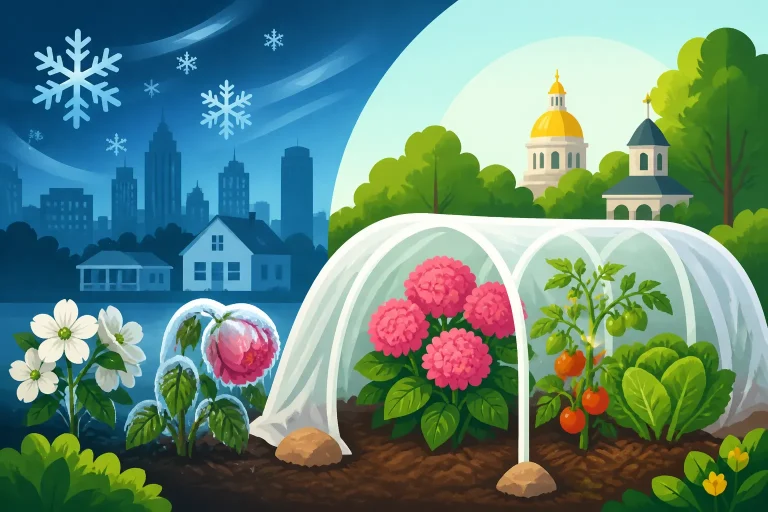
Even a careful decision can be followed by an unexpected forecast shift. If tender crops are already planted, respond to the actual weather outlook and use protection appropriate to the situation. No cover should be treated as a guarantee, and protection needs to be set up correctly to avoid damaging plants.
A fabric cover or another suitable protective material can reduce exposure when used as intended. Keep the material from resting heavily on delicate foliage where that could cause damage, and secure it so it is not easily displaced. Check the expected conditions and the protection method’s instructions rather than assuming any household covering will provide the same result.
Plastic requires particular care. A sheet laid directly over foliage can cause problems, and a covering that traps heat during sunny conditions may need attention. Follow product directions and reliable local guidance for setup and removal. If you do not have a safe, workable method ready, that is another reason to wait before planting.
For targeted advice on cold protection around the metro area, see Protecting Atlanta and Decatur Gardens from Late Spring Cold. When to Put Frost Covers on Plants and When to Vent Them explains the practical considerations involved in using covers. These are useful preparations, but the best protection is not planting tender crops before the remaining risk is acceptable.
If cold weather arrives after planting, inspect plants after conditions improve. Avoid making a quick decision based only on drooping leaves immediately after a stressful night. Give plants time to show whether they are recovering, and remove badly damaged material only when the extent of injury is clearer. Continue to follow the crop’s growing guidance and watch for signs of ongoing stress.
It may also help to keep replacement plants or seeds available, if that fits your plan. A backup does not prevent damage, but it can make recovery less frustrating. The choice to replant should depend on the condition of the surviving plants, the forecast, and whether there is enough growing opportunity left for the crop to mature. Do not assume that every damaged plant is beyond recovery or that every damaged plant will bounce back.
Frequently Asked Questions
Is March 15 a guaranteed last-frost date for Atlanta?
No. It is a historical normal for a named weather station and probability, not a promise about a particular spring or garden. Use it as context, then check the forecast and account for your yard’s exposure.
Can I plant tomatoes, peppers, eggplant, or okra during a warm spell?
A warm spell alone is not enough to establish that planting is safe. The University of Georgia Cooperative Extension’s guidance is to wait until frost danger has passed, while also considering the forecast, soil, plant readiness, and local exposure.
Should I wait if my forecast looks mild but my bed is cold or wet?
Waiting is a reasonable choice. Cool or saturated soil can make planting difficult, and a comfortable daytime forecast does not change the condition of the bed. Recheck the soil and forecast before planting.
Are raised beds or sheltered spots automatically safe earlier?
No. A bed or sheltered spot may differ from a more exposed part of the yard, but it does not guarantee protection from frost. Judge the specific location and current outlook rather than relying on the structure or position alone.
Sources
- NOAA National Centers for Environmental Information — NOAA NCEI 1991–2020 Climate Normals — Atlanta Hartsfield-Jackson International Airport (checked November 14, 2026)
- University of Georgia Cooperative Extension — Home Gardening | CAES Field Report (checked November 15, 2026)
Disclaimer
This article is for general informational purposes only and does not constitute professional advice. Laws, prices and regulations vary by location and change over time. Consult a qualified professional for guidance on your specific situation. Georgia Gardening Guide is not a government agency and is not affiliated with any university extension, state department of agriculture or other government agency.